

Toward Genuine Reform
Finding solid ground amidst an impending wave of fascism and corporate dominance.

Since Trump’s “reclaiming” of America—though he’s maintained firm hold on the cultural discourse since leaving office— I have seen a barrage of assertions online that have leaned into Trump's regressive agendas, drawing exclusionary lines across communities. One of the more degenerate displays of this has been the gleeful encouragement of deportation for Trump-voting Latinos. I've also seen a blitz of staunch condemnations directed at all the 'use your imaginations' who voted for him. And while I do occasionally enjoy the face-value humor of such displays, I believe this kind of dialogue, however flippant, will do more to repel potential allies from progressivism than to whip them into shape. These sentiments tend to reek of a pungent doomsday apathy: a form of passive acceptance that our country is simply revealing its "true colors." Yes, our country is overwhelmingly racist, sexist and xenophobic and a majority of them are vindicated by the election of Donald Trump, but this is not the lesson. We must confront the underlying structures of power and economic disparity that fuel these reactionary divides, because far-right forces rely on you succumbing to fear and resignation and the institutional Democrats running the show rely on responding to those anxieties with a veneer of progressivism, all of which serve to uphold a system that prioritizes corporate interests over genuine social and economic reform. This internet-circulating mindset is amplified by ass-saving campaign strategists and Democrat operatives, on CNN and the likes, eager to shift blame away from themselves and appease their money-fountain benefactors. These are the same strategists who tremble at statistics like this and would rather drag the party into the historic loss of the popular vote, maintained since 2004, than embrace bold, transformative policies.
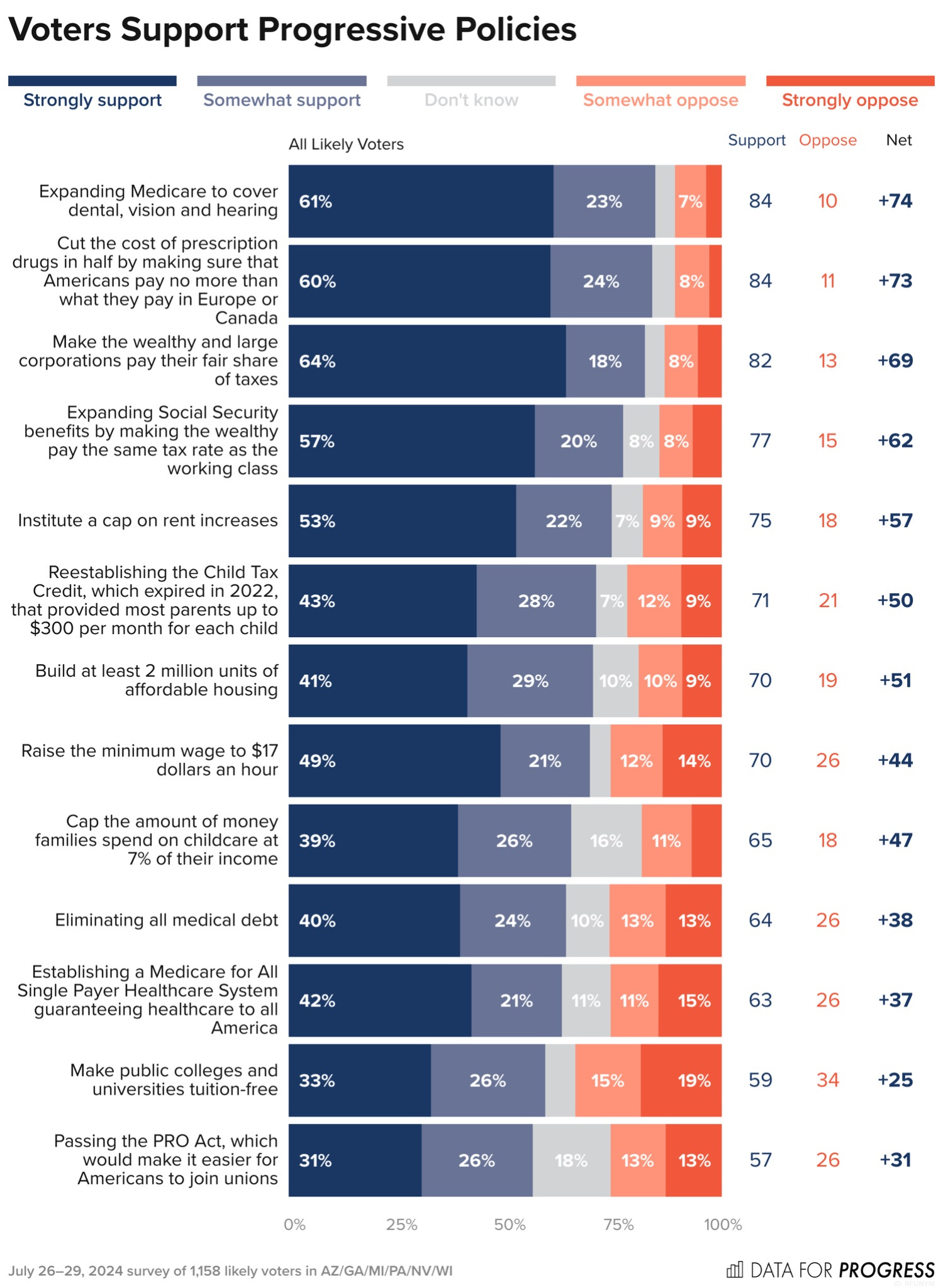
Instead of aligning yourself with dead-end corporatist messaging, I implore you to recognize the critical reality: a demographically broad swath of people, including considerable numbers of low-income voters who’ve historically gone blue, were mobilized by Donald Trump—not despite, but largely because of, all their alarm-sounding about his dangerous authoritarianism, which made up more of their campaign gesturing than any dynamic policy. As Bernie Sanders put it “The Democrats lost this election because they ignored the justified anger of working class America and became the defenders of a rigged economy and political system.”
This is not a failure of Democracy, it is Democracy working exactly as it currently exists—failing to address or even name the inequalities at its foundation. Donald Trump convinced the populace of his narrative and the Democratic campaign played into it with weaker convictions. Only one of these voices steadfastly channels broad-based anger. And my choice of “Democratic campaign” rather than Harris is deliberate, meant to honor the extent to which this has acted as a longstanding devil on the party’s shoulder.
Donald Trump’s pitch has always been flashy scapegoats for economic frustrations, followed up by a promised no-nonsense, albeit fascist, approach to fixing them. The Democratic Party managed to win against this under a unique circumstance: the aftermath of a global pandemic, recklessly mismanaged and downplayed by Trump, where Biden demonstrated a staunchly opposed vision and avenue for change. But the platform, this time around, could not benefit from such an anomaly. This time’s largest obstacle was Biden himself, who held an abysmal disapproval rating amidst rising economic dissatisfaction. But the vibrato that placed him up for reelection instead of allowing a robust process of a democratic primary, causing the late-stage dropout of Biden and entry of Harris, tells you all you need to know about the dead party vision.
Instead of doing what the circumstances begged for—carving out a distinct, bold vision with a fresh, progressively dynamic candidate, perhaps bolstered by the much needed reminders of the productive gains of his administration and current economic consequences of Trump’s collateral damage (which were both largely drowned out by the intensifying economic frustrations of working class voters)—they relied, again, on foregrounding Trump’s “disqualifying” features: his incitement of January 6th, decimation of abortion protections, legal entanglements, and generally antagonistic demeanor. But these stood no chance against the blame and frustration placed squarely on their administration for the economic realities Americans were experiencing.
The Harris campaign, privy to all of such statistical insight and with a chance to recalibrate, still decided to lean into Trump’s controversies. And rather than delivering a progressive message grounded in substantive reforms to inspire disillusioned voters and rebuild trust among those alienated by establishment politics, they pursued a safe, “centrist-friendly” approach that unambiguously validated Trump’s flashy scapegoats and fashioned watered-down solutions to fit their broken platform of performative progressivism. On top of this, they actively bulldozed over their progressive—and even more demand-flexible—coalition’s concerns to extend their efforts further toward right-of-center “swing” constituents, who, evidently, ended up voting for Trump.
Maybe if economic disillusionment was not at an overwhelming peak under their party’s disapproved incumbent bearing the responsibility, if she could detach herself from him rather than effectively run toward him in her refusal to name anything she would do differently at every public opportunity, or if the party could name the actual enemy (corporate greed and unchecked capitalism) rather than the "dangerous GOP"—whom people had developed more than a taste for in their desperate economic conditions, then perhaps the faltering Democratic platform might have succeeded once more. But now, the depth of their political stagnation is glaringly evident.
The sooner liberals detach themselves from their mythical justifications for this loss—recognizing that their leadership’s neoliberal neglect of the working class only serves to reinforce the uniparty dynamic (both parties willing to MacGyver a deceptive narrative in order to uphold their corporate interests) and drive people toward the neofascist alternative—the sooner we can actively resist this rising far-right movement and organize to build a unified, class-conscious resistance that reimagines a new and productive political form.
The reactionary framework dominating American discourse is as far from organic as it is from truth. The path to resistance lies in organizing and fostering a sense of solidarity and class consciousness that unites people across racial, gender, and all identity lines. This means strengthening unions, building community organizations, and advancing a progressive, rallying populist message that refuses to accept capitalist-driven agendas from both parties and exposes who truly benefits from the divisive tactics of the far right.