

The Hopecore Wars and A Sublime Ghost Story of Senegal
Hopecore needs its darkness. This one does it with flair.

Thanks for tuning back in to Scribbled Loose!
Your readership is a gift and today I present to you, in return, your twice weekly gift back.
JUMP on board if you haven’t. Artist Interviews are cooking, weekly explorations of various luscious topics are cooking and as always, the super-swelling list of great works that should be on your radar are sizzling.
First post of Feb you know what that means… its Black History Month and there’s so many ways to celebrate. If you were me, you’d be diving back into the works of black intersectional advocates like Audre Lorde, reading plays by black theatre pioneers like Ed Bullins, and watching movies like Killers of Sheep (Charles Burnett 1978), The Watermelon Woman (Cheryl Dunye 1996), Dahomey (Mati Diop 2024) or my favorite Diop film, which I dive into later. Lastly, if you’d allow me to plug a fellow Substacker, Eric Morrison-Smith writes a hell of a read on revolutionary history.

In today’s newsletter we’ve got a Movie Meditation and more
Hopecore films, their opposite, and what they give to each other
A movie that puts the ghost in a gripping cultural tapestry
A clothing production shop of environmental innovators making swag from landfill waste

Plenty of films succumb to the weight of cynicism. Their endings compel you to sit, wet-bottomed and exposed, in a puddle of the foreboding. They dissect many not-so-dystopian topics of the world. The imminent annihilation of the planet, the once (seemingly) universal tentpoles of humanity being slaughtered by the thrusting fascist MAGA movement, the collapse of hope in the face of relentless capitalist slumlords making every outlet of human consumption a life or death game of penny-pinching. Plenty more films, however, present a hopeful vision for the future. They defy the odds of every calamity and betrayal to stir up the faintest feeling of hope, perhaps even painting the fine-stroked vision for a new kind of world. A future that promises the conditions for every person to thrive and communities that uplift each other in astounding ways. I think it’s important to acknowledge that both cinematic forms are equidistant to ignorance. They both carry the potential to fall on deaf ears, leaving us audience members feeling:
#1 Satisfied with the watch but feeling disaffected and uninspired.
#2 Unsatisfied with the watch and feeling disaffected and uninspired.
These feelings become much more likely when films commit to one, whether it be cynicism or optimism, without attachment to the other or without a “take” on said commitment. For example, a film that proclaims an optimistic lens, through characters, plot, theme etc., but never presents or even hints at an alternative. It’s a simple principle that spreads to nearly every creative vehicle. An argumentative essay without a counter argument is bullocks (forgive me for harkening back to my writing tutor days). While I am of the mind that films are intrinsically argumentative, I’m certain a great class of filmmakers see it a different way. Maybe the intention is to inundate the audience in one strong, unceasing flavor. But…I think the best movies sprinkle in some umami in that bitterness.
Because this is SCRIBBLED LOOSE and not some posh ad-driven critics forum (this is a Movie Meditation damnit!), I’m not just gonna hit you with a list of movies that tread this line well. I’m gonna zone in on one movie. The most recent experience that led me to discover these dichotomous qualities at their most profound.
As far as recent box office slammers go,
Yes, Sinners accomplished this well, transfixing us in a world where becoming a vampire is the compelling alternative to living a life of sanctioned violence, humiliation, and powerlessness, boiling us in the beak truth soup of both cost of resistance, even after escape; and the cost of complacency.
Yes, One Battle After Another accomplished this well, portraying resistance as an endless cycle where every victory is a sacrifice of self, every failure vindication for the enemy and hammering home the moral and generational consequences of choosing endurance over escape (and vice versa)
Even Eddington and Bugonia with their nihilistic slants had the gumption to confront the consequences of warped senses of truth, Eddington by holding a mirror to pandemic polarization and the absence of standard moral vantage points, and Bugonia by unraveling the human cost beneath paranoid conspiracy delusion rather than offering easy villains or answers.
But the movie I want to talk about today is Atlantics.
<<SPOLERS AHEAD>>
I must preface that for today’s Movie Meditation, I’ll be somewhat circumventing my anti-movie review style where I dial into a singular element of movies rather than paint a holistic, prosaic image because… I want to. And this one warrants it.

This feature directorial debut by Mati Diop blew me away. I became accustomed to her through her documentary Dahomey which, similarly, approaches culturally significant subject matter from a brilliantly anomalous angle. As a viewer and a filmmaker, my senses are attuned to a few things. How films interrogate power structures without resorting to polemic, how they balance interiority and spectacle, how they center marginalized perspectives without scrapping complexity, and how they illuminate contradiction and moral ambiguity without sacrificing emotional truth or grittiness. This sensibility guides not only the stories I choose to tell but also the way I collaborate, edit, and construct cinematic rhythm. A commitment to ethical clarity, even in the smallest creative choices is really important to me. It’s the reason I’m drawn to work that is politically aware but not didactic.
Ada is a young woman in Dakar, whose lover, Souleiman, disappears at sea, escaping to find stable income in Europe. A lively prologue situates us in the unstable world of Dakar’s construction workers, immediately framing the stakes of migration, labor and longing in Senegal.
Atlantics is a movie that does it all, but what it channels so jarringly well is a scrappy groundedness that, amidst high-stakes and supernatural interventions, finds heart in a character on the outskirts, ushered into arranged marriage and embroiled by the very same structural failures that drove the men to sea (a lens unlikely in itself considering the diminished value of women in this portrayal of Dakar). Ada’s grief becomes inseparable from collective struggle and the vanished workers’ absence is felt throughout every corner of Dakar. She is the release valve. The supernatural twist that emerges about halfway through was an intense revelation the subsequent intertwining of tangible human struggle with a haunting ghostly presence made it a profoundly affecting, almost otherworldly experience. It took my understanding of the film to a whole different level.
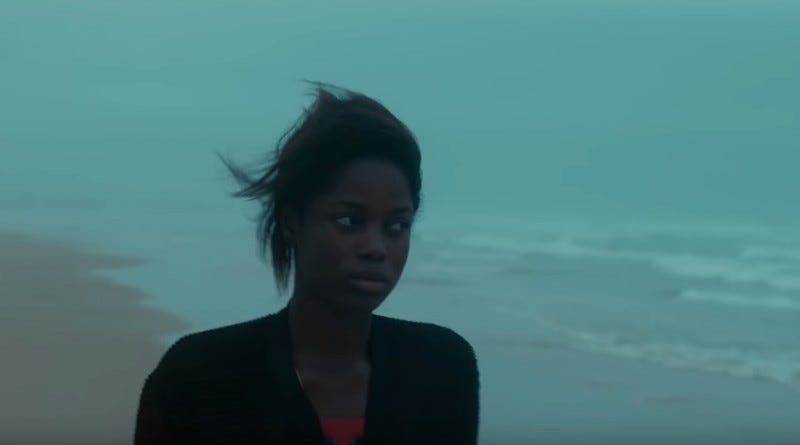
Every film lives and dies with character and Ada holds the weight of her desires and her familial expectations with a load-bearing repressiveness that feels spiritually possessed even before the supernatural reveals itself. I felt drawn in by her in a cagey cousin kind of way but I also felt disquieted by the resilient confidence she carried after being tossed around by various authority figures for nearly the entire movie. Her lens made this what it was. She carries the hope forward while carrying the sorrow too.
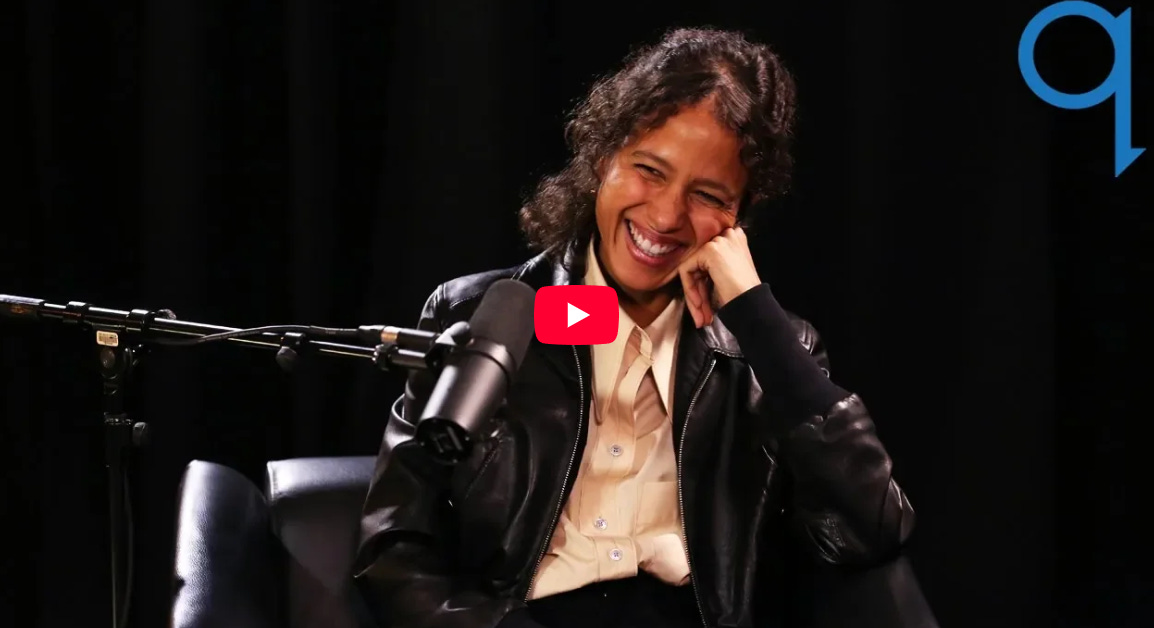
Diop sees cinema as the most “powerful tool to tell the story of these people.” And she found it important to bring forward an “individual dimension” to the migration phenomenon in Senegal which has been “approached by a very cold and abstract, statistic and economic angle” which she simply couldn’t stand any longer.
She is a director with a pronounced power to reckon with abstract, the individual and the concrete conditions a misrepresented country endures and her directorial presence throughout the film is felt through the thematic boldness she champions and the sensitivity of spirit she holds for the nuances of a vibrant and disparaged community. Her documentary sensibilities remain clear as day and I don’t think a film like this is even possible without those stylistic impressions.
Diop made a short film engaged with the same subject matter before developing this feature and she chose to make it on a larger scale because she had to. It was a mission she was called to by her own Senegalese roots and the lack of substance with which the country was being characterized. Mission-oriented filmmaking is special, especially when it holds two truths, tells a story only you are equipped to tell, and gives an audience more than they’ve been equipped to handle.
I recently got put on to an LA based clothing production shop that makes all their garments from a thoughtful mix of consumer waste, deadstock materials and organically grown fibers sourced locally.
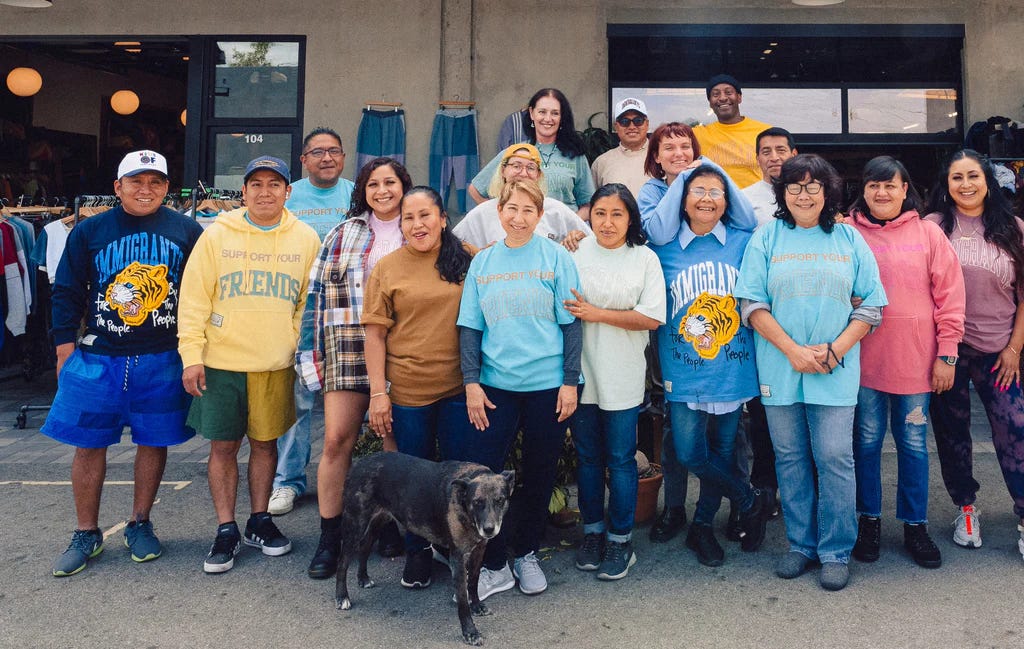
Their small and mighty team of garment savants whip up some super dashing, diversely classical pieces and their initiative, which started in 2017, has made a 6 million pound impact on textile waste. Every item is entirely unique, each bearing the mark of various discarded fabrics spun together to form a whole new beauty. Oh! They also make home goods (of particular interest to me as I plan my move to NY for film school).

For more ethically made, artisan executed works, checkout the Great Creations page.