

Reflection Post-Election: The Plague of Liberal Delusion
I’m a leftist, and you should be too because it truly is our only chance.

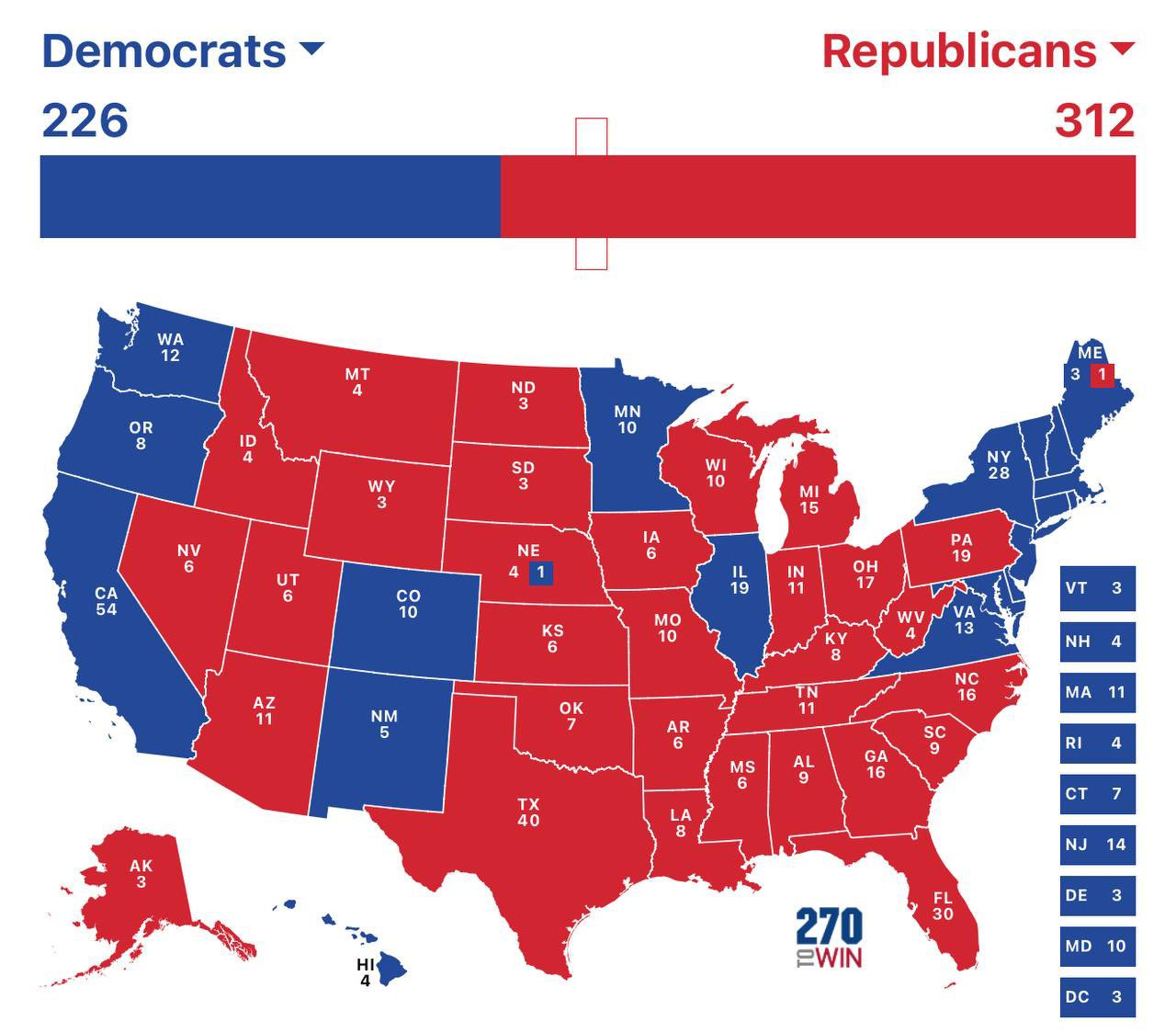
The national fate has been sealed. A Trump win was secured over the grueling night of November 5th, where even the most grounded assessments of Harris’s chances were defied, battered, and bruised as she lost all seven swing states, won Democratic strongholds by the slimmest of margins, and failed to close the gap that Biden once did in a single state. The Democratic campaign, with all its high-stakes messaging and desperate reaches, has crumbled, at no direct fault but the party’s itself, its ideological inertia, and its stubborn commitment, they refuse to relinquish, to a decayed, feckless liberal vision.
As the dust settles, conservatives and liberals alike will delude themselves of reality, the former claiming a restored America, and the latter issuing blame in all the wrong places. In response to this, I wish to provide my most measured and clear-eyed assessment, despite the best efforts of my overwhelming frustration, urging me to tuck myself into a dark cave and shut out the world.
I spent the day, and long evening, not on Notre Dame’s campus like most students, but in Kalamazoo, Michigan, capturing a large election night gathering: the final scene for my documentary on the Kalamazoo Democratic Party and their mobilization efforts leading up to the big day. The scene was defiantly vibrant, even as the red wave loomed over the electoral map.
The energy felt disturbingly familiar. The same unshakable optimism that has cost us any meaningful chance at substantive reform and has earned us a second tyrannical Trump term, this time weighted with a foreseeable vindictive reckoning. The same delusional, self-righteous attitude that has failed us on a capital-driven institutional level.
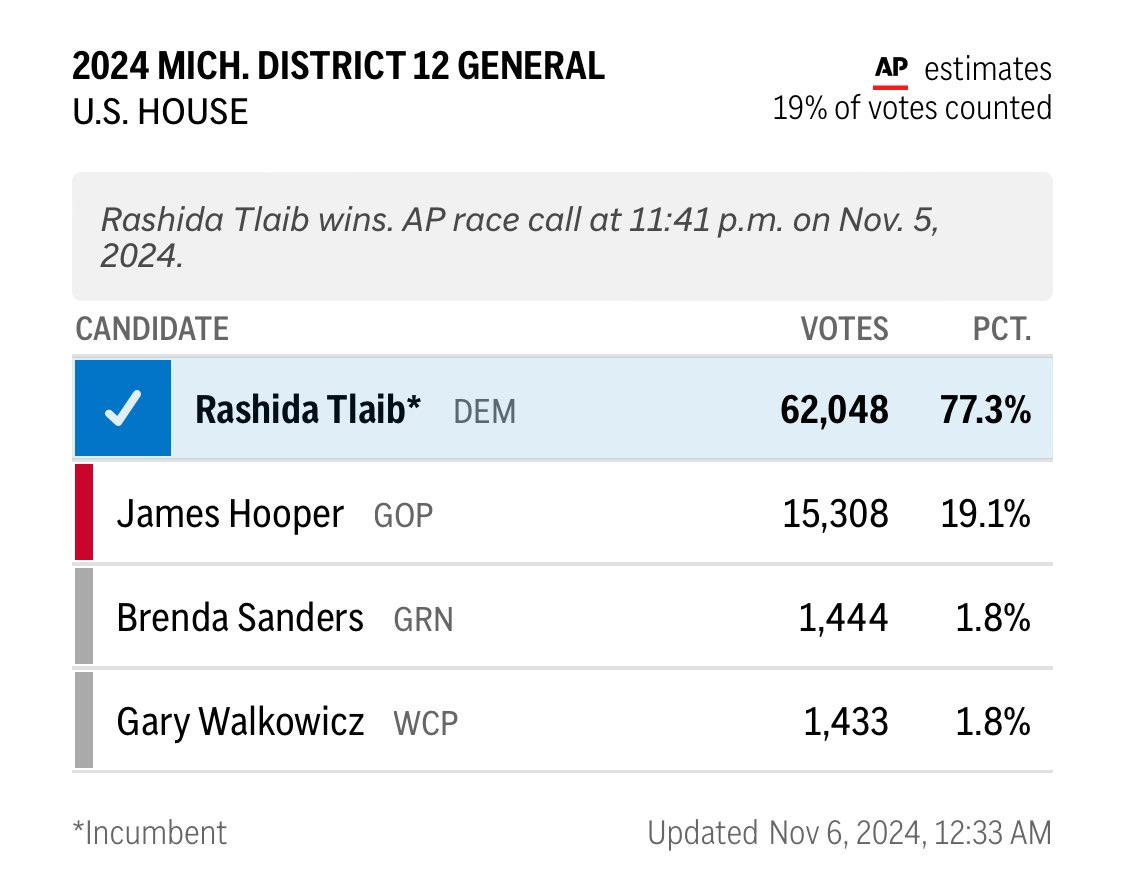
While many will attempt to convince you otherwise, asserting some ‘mighty right-wing shift’ in the American populace, a supposed lack of leftist or marginalized support, or the impacts of racism and sexism, I offer you one fact as a teaser before urging you to continue reading my analysis. Rashida Tlaib, an unwavering progressive Congresswoman representing Michigan’s 12th district, won 77% of the vote in the state, including in districts that flipped from Biden to Trump this election. Yet Kamala lost Michigan. These people didn’t suddenly turn right-wing; they were actively lost by the Democrats, who chose to ignore and patronize them in pursuit of their neoliberal agendas.
Last night was the consequence of running a boneheaded campaign built on the equally boneheaded framework of liberalism—an ideology that gestures at change but continually upholds the structures of the dominating forces of power. To make the distinction clear, liberalism is not the slightest bit “left”, despite its consistent conflation with leftist principles. It is a center-right capitalist ideology. It is rooted in a naive faith in institutions, presenting itself as a champion of equal rights and progress while ignoring the deep-rooted inequities within those very systems. It fosters the illusion of inclusivity by offering token reforms that fail to address the structural injustices embedded in society. It upholds white supremacy by prioritizing individual rights over collective liberation. It regards issues like poverty, homelessness, and inadequate healthcare as unfortunate side effects of a functioning system. Being left, “progressive”, means embracing socialism, where healthcare is a right for all, workers control the means of production, and billionaires are a relic of the past. Leftists recognize these problems as direct results of an unjust and irrational system. They understand the liberal facade as a superficial construct that favors the elite and obscures its role in sustaining systemic oppression. Leftism seeks to uproot these oppressive structures at their very stem, a fundamental restructuring for economic and social systems that prioritize the well-being of all.
I have, up to this point, been thorough in my critique of the Democratic campaign post-Biden drop, and you can imagine my general perspective on the republican one— morally bankrupt and structurally incompetent. To spare you any drawn-out onslaught, I’ll leave it at this: the fleeting moment of hope for a real departure from Biden’s failures, sparked by Harris’s campaign, was disastrously squandered. The campaign lost steam the moment it hit the hurdle of yet another centrist strategy—one painfully similar to Clinton’s in 2016, in its cynical and calculated disregard for working-class and minority voters.
Harris had a rare blank slate, an advantage Clinton did not, but she forfeited it, failing to distance herself from the prior administration and offering little more than an abstract notion of “change.” When asked what she would do differently from Biden, she bafflingly responded by promising she would appoint Republicans to her cabinet, granting them a “seat at the table." Rather than pursuing meaningful reform, she treated the progressive base as disposable, adopting Trump’s sensationalized anti-immigration rhetoric without countering its foundation of lies, and staying silent on the atrocities in Gaza, alienating a significant portion of Arab voters. She courted right-leaning neoconservatives like Liz Cheney, hoping for a foothold in white suburban areas—an imagined voter base that proved nonexistent, as her dismal performance in those areas displayed. If voters are leaning Republican, they will choose the real thing over a “Republican-lite” Democratic administration EVERY. SINGLE. TIME.
To make matters worse, the campaign’s most promising decision, selecting Tim Walz as vice president, was wasted. Walz, with his authentic progressive track record, could have energized the base, but instead, he was forced to toe the line of a centrist, uninspired message that undermined his appeal.
The Democrats’ longstanding neglect of progressive policies created the opening for Trumpism out of the gate, and if we are to stand a chance against fascism in the long term, we must abandon liberalism.
The rise of Trump in 2016 was not merely a fluke; it was propelled by the Democrats’ failure to respond to the economic and social crises exacerbated by the COVID-19 pandemic. While the country grappled with the fallout of a public health emergency, Trump seized the moment to exploit fears and frustrations, presenting himself as a disruptor of the status quo, despite his presidency being a continuation of the very policies that led to these crises. And still, faced with the undeniable evidence of their campaign's failures—even when it culminates in the most concrete of losses, Democrats inevitably turn to the 'what about the right?' diversion—a tactic as futile as blaming a botched surgery on the broken bone rather than the incompetent surgeon. Their solutions remain superficial, and capital-concerned, and if anything, treat only the symptoms while leaving the root causes intact. This has always allowed reactionary forces to gain even more ground.
Amidst the unfounded liberal outcries blaming leftists, the reality is clear: the Harris campaign followed their proposed populism to a tee, despite all signs pointing to its failure, and it simply didn’t work. The Bernie campaign, which galvanized millions around a platform of genuine progressive reform, was strangled by the same Democratic establishment's unwillingness to look past their self-serving interests for the urgent needs of America. It’s not the elusive populist appeal of the right; Americans have consistently rejected Trumpism for nearly a decade. There has never been a moment in his career when he enjoyed genuine personal favorability. His presidency was marked by failures—an abysmal response to the pandemic, characterized by negligence, misinformation, and prioritizing economic interests over public health; a steady emboldening of mass displacement and genocide in Gaza by fueling Israel’s aggression, steering the ship toward October 7; a reckless deregulation spree that eroded environmental and public health protections; a stimulating of white supremacist conviction; a refusal to address the climate crisis with any seriousness; a dismantling of workers' rights; tax policy that overwhelmingly favored the wealthy, all despite his promises to act in the best interests of the American people. Centered around the deceptive notion of reinstating "pre-2016 normalcy," his presidency was a failure by any measure, including his own.
Soon, Republicans who marked their seal of approval for Trump will discover the falsity of their allegiance and the precariousness of their positions. But this is not their political failure. It’s ours, a reflection of a profound misjudgment of the electorate’s needs.
You can't beat Trumpism by mimicking its tactics. To effectively counter Trumpism, one must engage with the material realities and anxieties that drive voters to embrace his brand of politics. Only by offering substantive, relatable solutions can we reclaim the narrative and build a coalition that resonates with the American people. You can’t win on a platform of foreign interventionism masked as “middle-class policy.” You can’t win by ignoring the lived struggles of voters. When Harris took the reins, the Democrats had a promising path forward, one we’ve seen succeed before, at least electorally, but instead, they chose to appease the right, moderate their message, and campaign on “not as bad as the GOP.” And predictably, that approach failed.
I’m not claiming socialism is some key to automatic electoral victory, though it is to genuine societal transformation. I'm saying that a confident promise of progress is both a strategic advantage and a moral necessity. Obama was received as a figure of hope and change on the heels of a publicly enervating war-driven republican era. Despite his compromises on healthcare reform, continued military interventions, and number of failures in addressing systemic inequality, he communicated progressive-facing policies with a pronounced vision, much of which he also saw through, and that momentum resonated with the public, positioning himself to be a true beacon of hope for those yearning for change.
Battling the same orange-skinned beast, the difference between the results of Biden’s 2020 campaign and Harris’s 2024 effort lies in the approach to progressives. Biden, at the utter least, made promises to progressives, treating them as essential parts of his coalition—even if it was largely just rhetoric. Harris focused her efforts on courting conservatives, leaving the priorities of the people wholly sidelined on the cutting room floor.
With this thread of deterioration, Biden's legacy extends beyond his ineffectual tenure in office to bringing a far more radical Trump to power, however far removed.
I cast my vote for Kamala Harris as an act of desperation, hoping to wield whatever influence I had to prevent outright tyranny, with the faint optimism that perhaps, if pressured enough, her administration might concede to meaningful change. But that optimism, I now see, was misplaced. Last night’s results are a fitting, if bleak, conclusion to the slow plague of liberalism—a doctrine working tirelessly to neutralize progressive hope that delivers for the people that need it the most.
Change in the Democratic Party will demand an unwavering commitment and relentless effort. They are as corrupt as they are spiteful, and their response to failure is seldom one of reflection and accountability, a neglect that brings us here to begin with. Dragging the party back into new cycles of complacency, finger-pointing and blame shifting, will not yield the transformative change we desperately need.
To liberals, wake up. Your superficial charade as a force for good, despite the destructive nature of your inaction and empty promises, is not enough. The era of complacency and denial must end here.
To conservatives. Without an honest reckoning in your foundational understanding, you will never win.
To fellow leftists, hold steadfast. All hope is not lost. The fight for a more equitable and just society continues, and the call for radical change is more vital than ever.
To the marginalized communities without voice, your struggles are the heartbeat of this movement. Your experiences and demands for justice must remain at the forefront as we seek to reshape the political landscape.
Together, we can forge a path toward a future that honors the needs of all people, not just those in power. Lean on your communities; harness their strength. It is through collective action that we will build anew.