

My 6 Arbitrary Style Rules
What do you like? Why do you like it? Tell me all your hopes and dreams!


Yep. We’re talking about clothes again. It’s no rumor that I am particularly solicitous when it comes to clothing and while that might strike you as a shallow affliction, my interest in style flows reliably through the filter of my technical, ethical, and socio-political investments. Those specific considerations will be made clear at the first whiff of my 6 style rules.
Stick to the end and see me practice what I preach.
Since the beginning of college to now, several months out and in the real world, I’ve had the pleasure of engaging in an operation of self understanding. This knowledge comes with not only a commitment to shrugging off other people’s protruding ideas of what should be, but also with a comprehensive list of the precise kinds of garments and accessories that boost my self-assurance (dare I say ego-assurance) and therefore every other part of my life…wink. Before you calculate levels of hyperbole here, yes, clothes really have that much power, and if you’ve yet to realize this fact for yourself, boy are you in for a treat. It’s an endless process that doesn’t feel like one. It’s a game of Where’s Waldo that never gets old. One where you recognize yourself in new things and your high-score continues to grow. But it’s also stupid, in the way that games both are and aren’t. I’m sure you’re more familiar with the way clothes are stupid, so I’ll touch on the latter. They’re a path toward letting your image fade into the background of your everyday endeavors, because when you feel yourself and in control, everything else follows.
For me, a natural product of this process has been developing a list of style no no’s that help me navigate clothing acquisition with prudence, but also beckon me to experiment. Now, I’m far from an advocate for stringent style rules, especially when they’re applied on the boundaries of gender and sexuality. But, as far as an arbitrary list of categorized regulations that apply to myself and myself only, I’m all in.
Here’s the list of awe’s and ick’s I’ve tracked and written down since beginning this operation and why I find them to be successful pathways to a healthy style ecosystem.
#1 - Effortless Feeling of Ease
No outfit shall feel overly engineered. What I love most about an outfit is its seamlessness. And I don’t mean perfect edges and lines, I mean how its imperfections and idiosyncrasies blend seamlessly into the unique character of someone’s personal style. This relates to the Japanese philosophy of Wabi Sabi, beauty can be found in imperfection, impermanence and simplicity.
#2 - Always repair over rebuy.
My second rule also siphons influence from Wabi Sabi. Taking stuff to get repaired is a lot simpler than people think. I’ve gotten countless shoes, jackets and shirts repaired for prices that average at around 30 dollars. I don’t buy clothes a lot and because of my sparing approach to purchases, there’s an extra level of value I place on my garments. Repairing them gives them a second life and a second identity.
#3 - Second hand FIRST
Time is the most underrated style curator. The environmental benefits and resistance to hyper-consumerism are an awesomely rewarding effect, but there’s much more to it. Shopping second hand feels like a cheat code to sourcing things that feel like you right off the shelf and that have lasting quality (made from natural, enduring fibers). They lived lives before you that informed how they carry themselves and how they speak to you now. The patina of age now paints the story the item tells. When I’m not shopping second hand, I’m shopping slow, design and fabric focused heritage brands that I know aren’t contributors to the expedited cycle of fast-fashion not just because it’s better for the planet, which is marginal considering the overwhelming cultural prominence of FF, but because the clothes themselves are just better. They embody more character, nuance and attention to detail. Like our favorite movies, food or songs by the makers we admire, clothing made by an intimate group of craftsmen who lingered on the details, specialized in their part of the design process and cared about the output along with the story it tells, is just as meaningful of an investment.
*Side note about “natural fibers” and their enduring quality: There are caveats! Sometimes (thoughtfully implemented) synthetic fibers increase the wearability AND longevity of a garment. The fleece is a great example: it traditionally includes synthetic fibers, and it holds up to wear, moisture and cold weather because of them. Natural fibers are awesome and certainly live up to their strengths, but they aren’t universally better in every context.
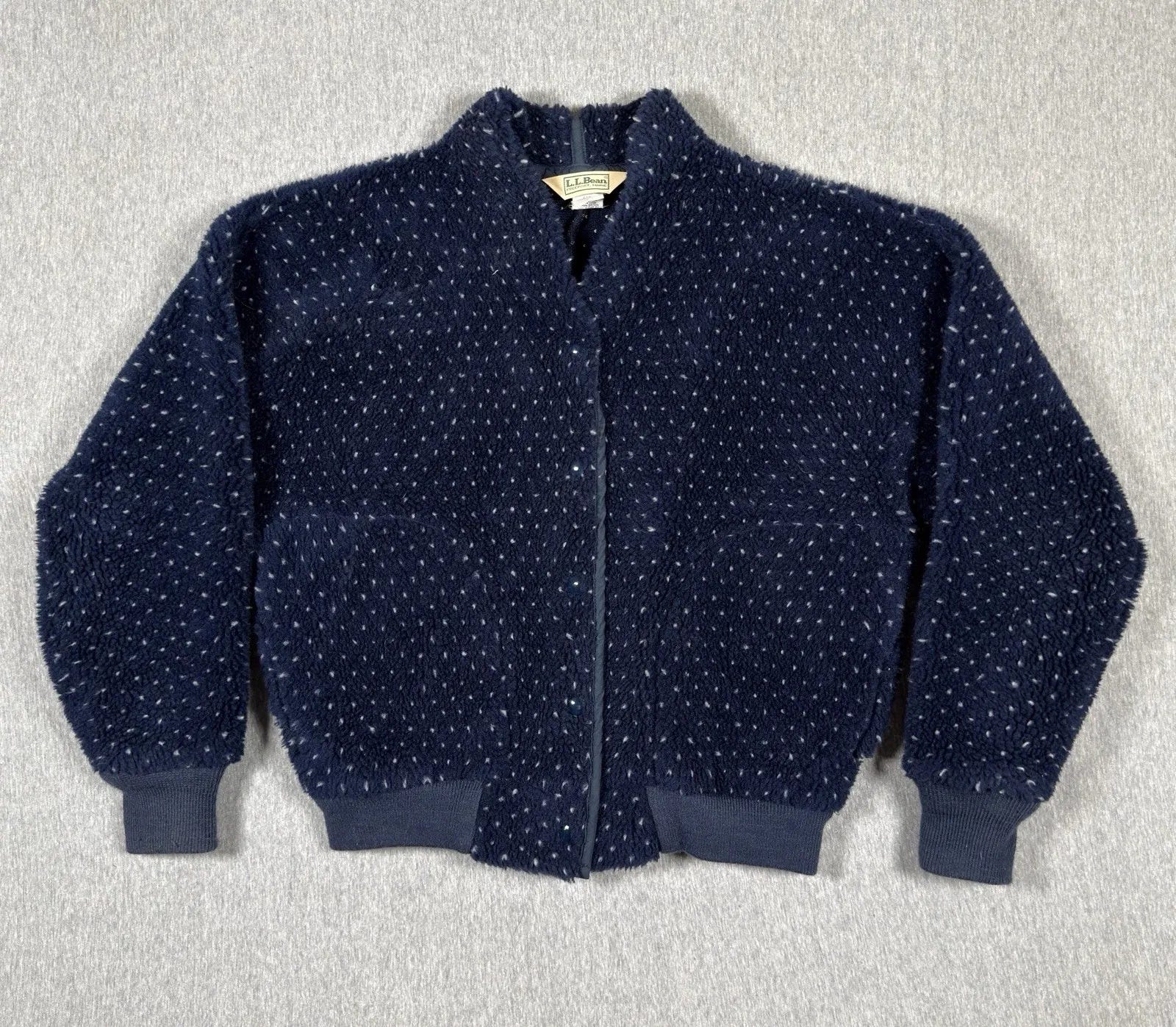
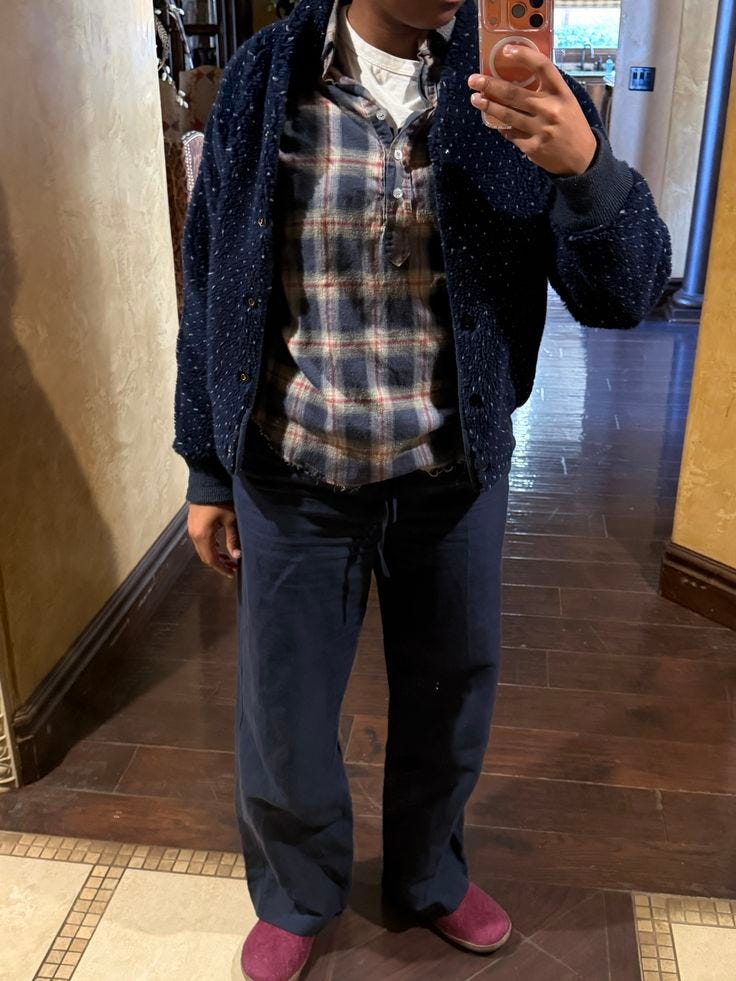
#4 - Anti Matchy Matchy
Something always feels off about a fit that’s too evidently congruent. It’s the reason I despise the sandwich method. At least the principle of it. It’s a styling “hack” that involves matching an element of your top half to an element of your bottom half. This method is completely antithetical to rule #1. It eliminates the element of unexpected charm, imperfection and juxtaposition – all things I believe define good and interesting style. Naturally, this also means I stray away from a matching set of any kind (excluding suits, ofc…).
#5 - Capsule Wardrobe
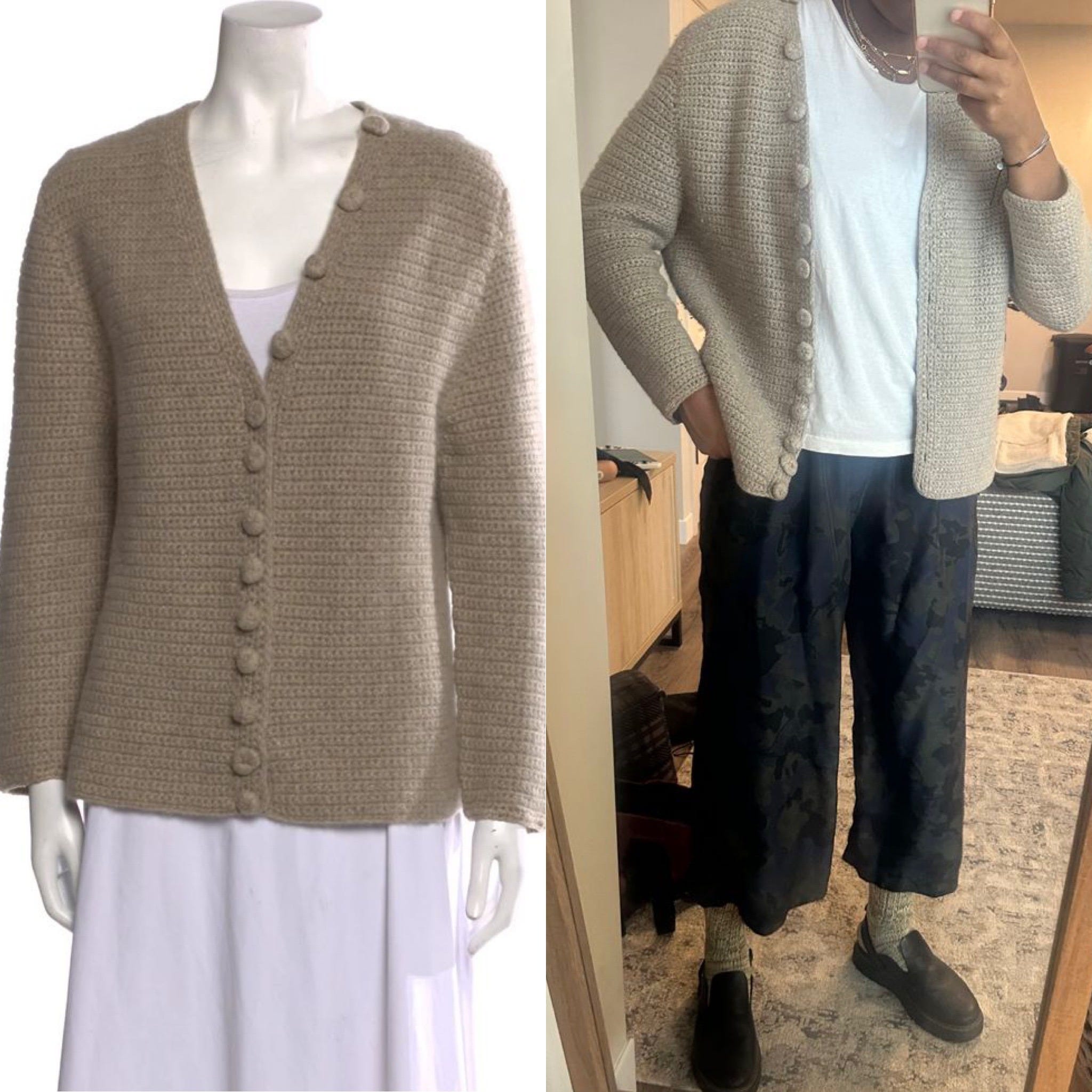
I am a huge fan of a painless wardrobe that requires as little mental energy as possible. I don’t want to contemplate on an agreeable combination of items for any longer than 10 minutes each day. Maybe this is a ripple effect from the chaos of getting dressed as a child, protesting the things my mom selected for their stuffy girlish-ness. Nevertheless, I am a capsule wardrobe advocate: a small, curated collection of items that mix and match with substantial synergy. Part of this ideal means choosing pieces that are versatile and “timeless,” which is easy when trends don’t sway you and you never shy away from an outfit repeat, otherwise known as a uniform. Important to note, this doesn’t mean a collection of “boring.” To keep my capsule wardrobe as vivacious as it is functional, I apply a double-filtered lens for detail. This directs me toward the sickest stuff that’s not only confidently playable within my closet but uniquely constructed, visually appealing and all around eloquent.
#6 - Moderation in Color/Pattern
Unlike the randomly numbered arrangement of rules prior, this indeed is the 6th rule because it’s the least important to me. My style is androgynous and teeters between the gender neutral and traditionally masculine. Perhaps as a result of that, I prefer colors and patterns that don’t scream into the void of either side of the conventional gender spectrum. I prefer what is “neutral” and balanced. This kind of moderation is what makes the occasional pop a pleasing refreshment to my aesthetic world, and a desirable one to play around with. Lily pads of bold in a pond of subtlety. Your fit can be fun with or without the fullest extent of the rainbow! You just gotta harness your fine detail fluency!
That's it, although I certainly abide by many, many more.
Most people develop a list like this in their heads. They stay away from certain things with the understanding that their interests lie elsewhere. I think interrogating these interests is just as important as indulging in them. You probably have a list like this, perhaps more stringent or expansive than mine. Lean into what delights you because in those particularities, buried within piles of embarrassing encounters and backfired discovery, is you.


