

Is that film take a meal or a recipe?
Hidden codes in movie takes; arguing w scholars; a DAY early b*tchessss


Firstly…..Happy pride! I’ve got an extra gay-saturated post coming to you next week of the listicle variety.
But for now, if you’re gay and subscribe to this newsletter, DM me and I’ll send you a Benjamin or two.
HOPEFULLY this is the first and last unsubsidized pride handout my humble but mighty subscriber count will permit.
Some quick housekeeping:
Attached to the Scribbled Loose publication site is a my substack user page (@alexxsjohnson) where I write notes with updates ab posts for the week, restack stuff worth reading and share other pithy things that might’ve been tweet worthy in a pre-Elon America.
In case you’re not aware of where to find this short-form fodder :
It’s also come to my attention that my comments are set to subscriber-only?? rUdE. I’ll fix it asap.
Back to it.

If you’ve even dipped a toe in the filmtok algorithm, you’ve probably encountered all the “styles” of film argumentation that circulate the platform. They start with pithy, click-worthy hooks and swiftly morph into vociferous arguments, defending the merit of their interpretation. The most sophisticated of them at least. But even if you’ve gone beyond a dip, perhaps taken a few laps, you probably see filmtok content in the exact same way that the casual, toe-dippers do: frivolous personal musings of equal legitimacy. This isn’t always wrong. But within that generalization is a chasm as great as the distance between the words you use describe a dish and the eating the meal itself. Today, I’d like to imbue the same sense of clarity that this revelation conferred to me when I first heard it, shifting the value proposition of every filmtok video and written analysis I’d encounter thereafter. And if you’ve heard of these distinctions before, as I am reheating nachos here, I hope my spiel, stacked atop my nascent preoccupations as a writer/filmmaker, can infuse a freshness that you fancy.
The chasm is poetics and hermeneutics. Two theories defined by their philosophy on how to discuss art. Poetics asks how and Hermeneutics asks why. For poetics, the question is how a film is constructed to produce a certain effect (singular). It seeks input from technical and formal attributes to understand how it came to be broadly understood by an audience through its craft markers. The question of Hermeneutics asks why films generate (divergent) effects across any number of interpretive frameworks, examining how cultural, ideological, and subjective contexts shape its varied reception. These methods of study, especially when it comes to film analysis, are best understood alongside the following complexity: They are competing theories but their approaches are complementary, amounting to a holistic understanding of a film as an art object, made with intention and consumed with interpretation. Starting with what I call the “meal” known as hermeneutics and working our way to the “recipe” of poetics, I’d like to delve into how a poetics-only approach constricts complete understanding and narrows our view of what a film actually does.
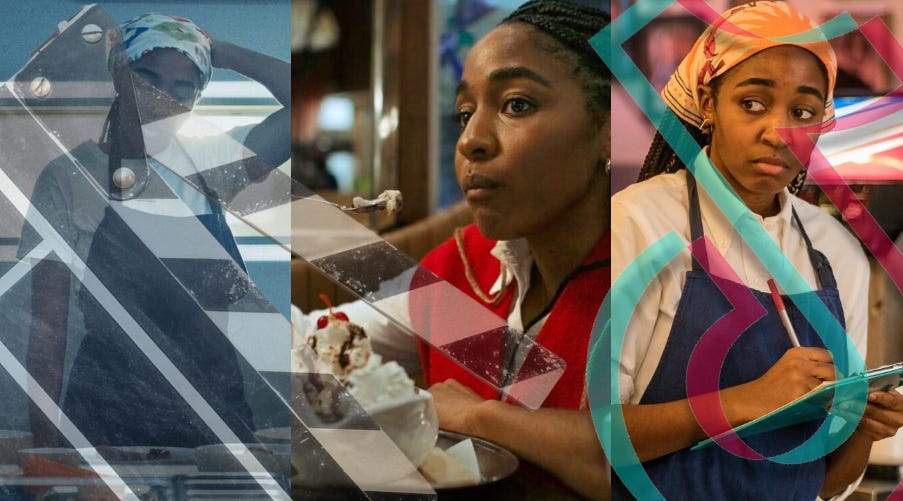
Hermeneutics is considered the dominant framework of institutional film criticism for its emphasis on interpretation and critical theory over technical analysis // receptiveness to political and social critique in film studies. Which tracks even off a glance (despite this having been the case for decades).
Some standardly hermeneutical movie critiques I’ve enjoyed:

Metaphors of Extractive Capitalism and Fabulation in Nope

I call these meals, mostly because they insist a taste. To go beyond the overt, agreeable takeaways of what’s written down in a recipe and the overt, agreeable takeaways of what that meal might look like to engage in a totally different type of conversation. No matter what the meal turns out to be, tasting it will always introduce a new branch of ideas.
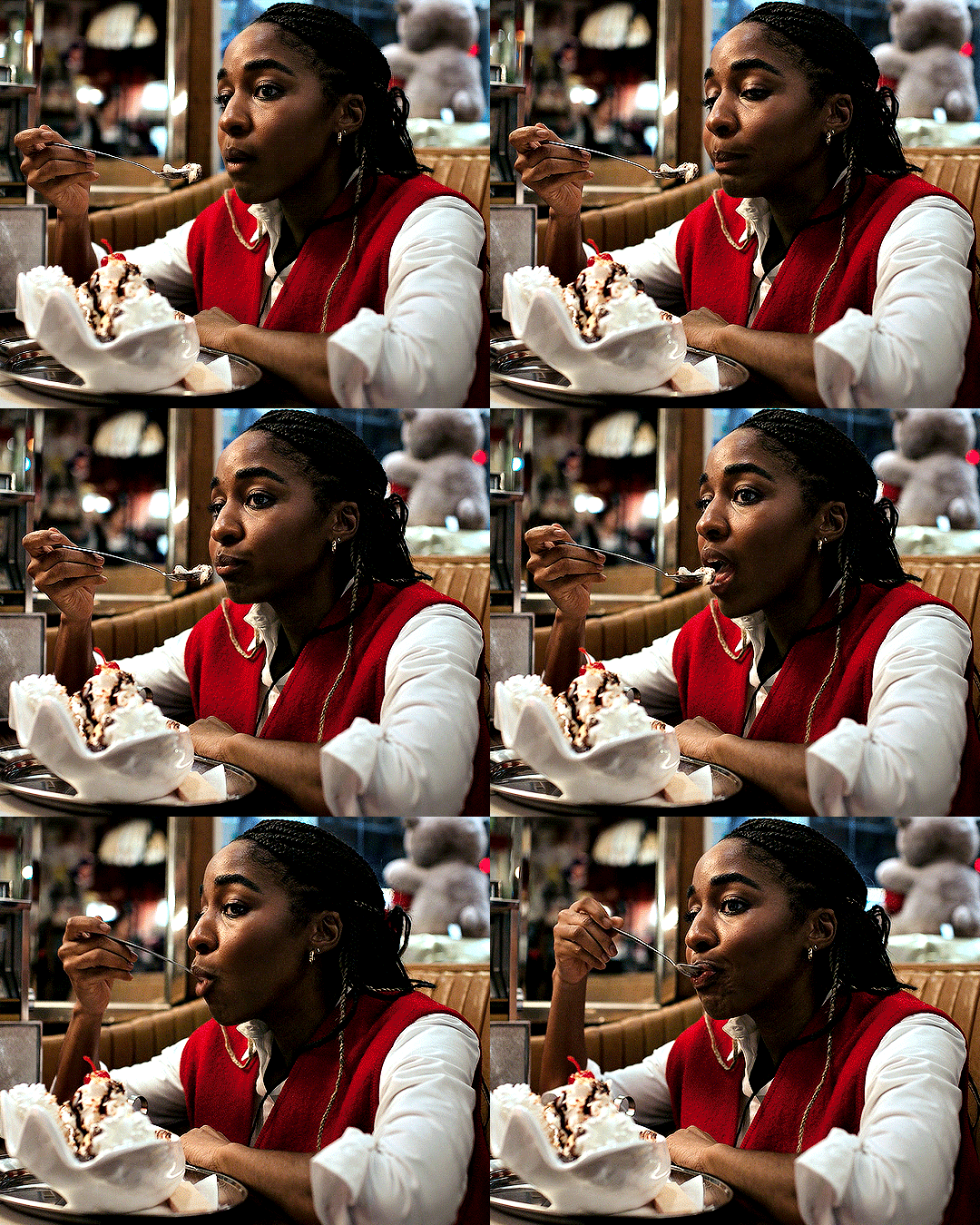
Like a delectable ice-cream sundae, minus the cherry, the puzzle-solving appeal of a hermeneutical movie review cannot be easily denied. Characterized by the distinct intellectual voice of the critic, they usually interlock with a specific social/cultural framework and work backwards, sideways and forwards, to “expose the unexamined assumptions on which a text may rely (political, sexual, philosophic, linguistic).” Or to reconstruct the broad reception of its meaning within the filmmaker’s authorial approach, which can summon evidence of artistry or narrative (Jordan Schonig of @filmandmediastudieschannel)
This is largely the reason why there are few, if any, books made for the purpose of espousing the theory of hermeneutics. There are, on the other hand, several books on the theory of poetics.
Reason being, Hermeneutics-based analysis need not justify itself. As the broadly adopted framework, hermeneutical works of analysis concern themselves most with justifying the expanses of their specific lens of interpretation and the conclusions they draw from it. But poetics, in excluding the implicit and subjective, adhere to a totally different standard that isn’t really considered “critique” at all.
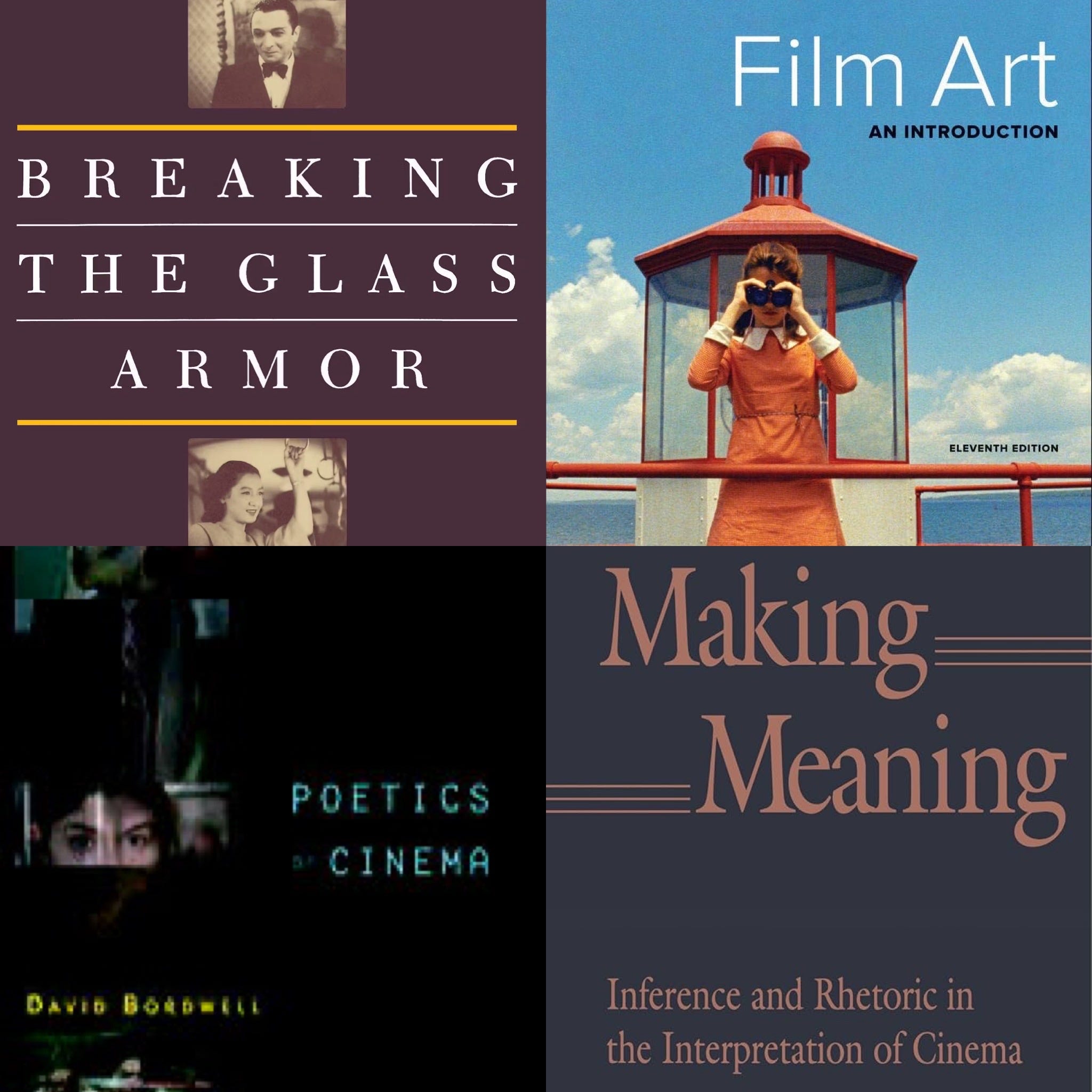
Three out of the four books in the image above were authored by David Bordwell, the preeminent pioneer of poetics. In his book, Making Meaning, he also dives thoroughly into hermeneutics, as the oppositional concept, in order to develop his argument. He’s the man I’ll be quoting throughout the rest of this piece (proper citations r for big money playas) and you’ll learn soon that this is less for the sake of glazing and more to prop up my dissidence. Poetics function more as movie roadmaps than critique, predicated on the “concrete assumptions embedded in the filmmaker’s craft.” An agreed upon meaning that all films inherently work to communicate. That meaning being “the result of deliberate and founding choices” that relate to form and style. “Sometimes these are articulated by practitioners; sometimes they must be inferred from the product and the mode of production” (Bordwell).
While hermeneutics focused insight might work to discuss how the themes of spectacle in NOPE comment on the entertainment industry’s exploitative nature, Poeticians like Bordwell would work from, say, the understood fear brought about by the opening shot remaining on a suspending bloody shoe to draw conclusions about the visceral impact of the image and sound cut together to create a trauma. Or from the production restraints that shaped the use of drone-mounted camera technology for the cloud sequences. He describes these poetical interests as “stable creative acts whose situational logic can be investigated.” These recipe-like qualities are not designed for dispute in the way that a hermeneutical breakdown of how class dynamics play out on screen might be. “Poetics is thus not another critical “approach,” like myth criticism or deconstruction.” This emphasis on construction doesn’t make poetical analysis any less interpretively valuable though. After all, a film is first an arrangement of formal choices perceived sensorially before it is absorbed as a constellation of meanings, affects, and associations. Which is why, for me, the dichotomy here is not a matter of right or wrong but of started or finished; reformist or revolutionary; recipe or meal. Bordwell championed poetics as the most sound approach to analysis, but the pro-rationalist, subjectivity-averse methodology with which he stakes his claim is where I discover the gravest neglect.
I cycled through a few different metaphors that I’ll list here for their lingering effects:
2D / 3D
2D = Poetics: The technical blueprint.
3D = Hermeneutics: The unique immersive experience.
Above Ground / Underground
Above ground = Poetics: The visible architecture of film.
Underground = Hermeneutics: The hidden currents beneath.
Blueprint / Living House
Blueprint = Poetics: The architectural plans
Living House = Hermeneutics: The house as experienced
I found the Meal / Recipe conclusion to be the strongest embodiment of my argument, followed by the Reformist/Revolutionary analogue.
A strictly poetical analysis of film stops at the green light of comprehension, just short of every avenue of social context and critical engagement there is. These are things Bordwell sees as necessary to “sidestep” as a way of understanding artistic construction beyond seeking to “decode” a message in a narrative. But in this same breath, he stipulates. Much more than a simple acceptance of the fact that “we cannot keep critics from building up implicit and symptomatic meanings; nor should we” Bordwell yields that the “poetic rigor” he advocates for “offers the occasion for inferential elaboration.” This elaboration is “performed on the basis of “schemas” every viewer has on hand,” which are the mental knowledge structures, expectations, and cultural conventions we employ to make sense of a movie. Because every film, whether we acknowledge it or not, expresses a worldview and is shaped by material and cultural conditions, these inferential elaborations are integral to the experience. This remains true regardless of whether the filmmaker is aware of those implications. He further defends this dynamic in, Poetics of Cinema, when he expands on a model of spectatorship that recognizes the viewer as an active, conscious participant, always actively building meaning with their real-life experiences and knowledge of cinema to process a film’s cues.
To employ my reformist/revolutionary analogy, a reformist approach to political change has never ushered in a true transformation. A reformist would, to be precise, empathize with a poetics-only perspective. To uncover how a film functions within an existing paradigm is to improve its ability to serve its current purpose. To optimizes a static experience. Poetics refines understanding, yes, but in prescribing an objective status to a film, it also avoids any substantive challenge. It strips films down to commodities that vary only in their value proposition. Not to mention, it drives a sizeable wedge between "expert" and "consumer." Those who read recipes cannot necessarily make them, but anyone can eat a meal.
Hermeneutics ushers in a revolutionary potential as an accessible path to new understandings. An opportunity for generative, counter-intuitive insights. While scholars like Susan Sontag would argue a traditional interpretation (hermeneutics) “impoverishes” art by focusing on hidden meanings, beyond what’s immediately felt and constructed on screen is a wide scope of assumptions that maintain an established order that can dupe us all. “Reformist” poetics becomes capable of turning revolutionary when it goes beyond the broadly observable and technically surmisable to ask: “Why do these formal choices exist in this particular way under capitalism?” When both are applied practically, hermeneutics could use a poetics’ analysis to reveal how specific formal choices serve ideological functions and poetics could use a hermeneutics ideological critique to enhance formal analysis and reveal how cultural production both reflects and reproduces commodity fetishism.
If we are to recognize that films hold the potential to reflect and transform culture, we must also recognize the importance of the role we play as consumers who engage the material and exist in the world that birthed it. Even while understanding the techniques, precise measurements and cooking times, to refuse to go deeper, eat the dish and discuss what effects it has on the tastebuds, what social contexts that effect emerges from that, is to starve. But you can’t technically arrive at a meal without a recipe. There’s always something to trace backwards from the meal, to understand it further, if your heart desires. And for the sake of fairness, let’s say movies are not the sole source of sustenance in this metaphorical universe. You don’t have to eat the meal, or even make it, to enjoy the experience. And once it’s in front of you, you could just look at it. Smell it. Jiggle it around. In this regard, the experience of a meal, recipe to completion, cannot solely be judged on taste. Hermeneutics’ revelations of taste-appeal need grounding in concrete formal analysis. A recipe to trace and a plate to assess. These are the baseline, comprehensible qualities any laudable film take might build upon. “If you and I see a driver swigging out of a bottle and swerving his car along the road, we’ll probably both suspect that he’s under the influence. The conclusion isn’t guaranteed: The bottle might contain iced tea, and he might be avoiding roadkill we can’t see. But our inference about DUI is more plausible. Films rely centrally on just such garden-variety inferences; it’s one of the ways in which narratives trade on real-world knowledge.” The recipe is but a first step toward an experience and the finished meal a step removed from the last. Stopping there, to simply read the ingredients again or size up the plate, depends entirely on your hunger and curiosity for the meal itself.
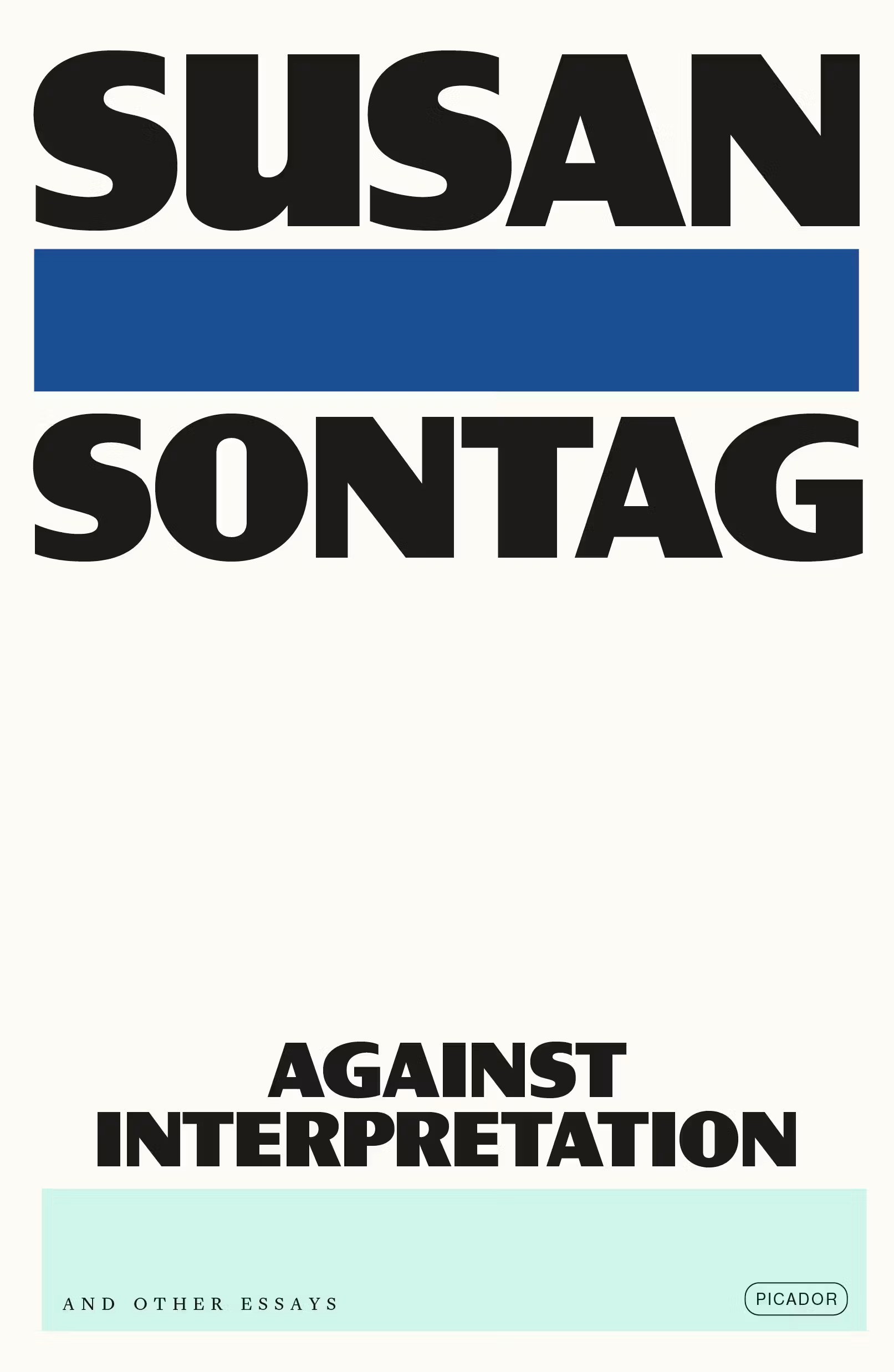
This morning, while adding the final touches to this post, I came across film creator, Derrick of simireviews, discussing the current “is it really that deep?” discourse, which seeks to encourage a stronger relationship with the sensory experience of a film sans analyzing it into the ground after. In the video he references a the Sontag book I did earlier, a book of essays with the same critique of the “taming” effect of interpretation, which she saw as a way to control and domesticate art by extracting a “true” meaning. I certainly agree that watching a film expressly for post-game analysis is a wackadoo modus operandi. It undermines the whole experience. I also reject the notion that one “true” meaning exists for any film. I believe both in the sensual immediacy of a cinematic encounter (reading the recipe, making it, savoring the eye-candy of the result) and in the dialectics of a medium that does not, and will never, exist as a fixed entity but as several interconnected and complex processes. In order to appreciate this second half, I prefer to go beyond the ostensible to eat the meal, and taste the flavors. Eating the meal is actually my favorite part. As a result, I’ve been known to favor hermeneutics, a preference reflected in how my metaphors lean partial to the culturally relevant. But so does this newsletter. The difference is that, here, maintaining an interest in what lies beneath doesn’t come at the expense of what lies above, the path that gets us there. That’s the goal at least.
Perhaps it's reasonable to demand far less from the humble TikTok review to preserve their succinct, pithy powers of swift single-minded analysis. If you could call it that. Most are off the cuff anyway, not committing to either or dipping in and out of half baked, though valiant, attempts at symbolic explication and technical reasoning. I think that keeps the genre alive. But the next time you scroll, don’t deny the urge to pull out the sorting bucket. At the very least it might help you sift through your algo with a little more discernment. Or help you call the spade when a bloke’s spewing something far from any formal or theoretical reason… and then proceed to enjoy the entertainment value of the nonsense :)
Speaking FAR from nonsense willbryanfilms on TikTok makes some of my favorite poetics forward commentary on the platform. You’ll often find him discussing manipulations of camera, blocking, cinematography, editing etc. that inform a feeling.
Here’s a great video of his about how “great movies will teach you how to watch them.”
https://www.tiktok.com/t/ZP8sFPA2H/
As expected, most people go hermeneutics-only mode on Tiktok.
These are my favs in that herd:
Thanks for reading today’s post, which indubitably betrays the SL “short reads” promise.
<3 Back to average length next week! HAPPY PRIDE <3