

BEEF Season 2 and its many excavations
Another excellent beefed up class commentary. Can't get enough.

Today: A Movie Meditation: TV edition!
I streamed the entire season of BEEF the minute I got through the OPPRESSIVE Netflix login code barrier and I am completely blown away. The first season of Beef hit me in the same way Get Out hit me in 2017, in no small part due to my connection to the tone and the sharp social commentary they both nail. The cinematic network of my brain grew two sizes when I watched them. Lee Sung Jin, creator of the show, notably writes from hyper-specific personal experience, which I think allows him to get as granular as he does to make something that is so incredibly pure of emotion, heart and revelatory humor. His writing is a conduit for the shadow self, the deepest, darkest conscious and subconscious impulses that have the potential to drive us farther and farther from firm moral ground. And it’s the same meaning-making mouthful I latched onto this season, which follows two calamitously intertwined couples wrapped up in the high stakes world that is working at a high-profile country club.
Lee Sung Jin is one of one, and because his work is so dialed into symbolic excavation and complex character study, I’ve taken a few days longer than usual to write this post.
I spent that extra time doing some much cherished research. Research involving the mechanisms behind human decision making. As my primary guide, I looked to Robert Greene’s The Laws of Human Nature. I found this an important step before starting this post because character is behavior and behavior is psychology. These are the thought processes that build character and, as as evidenced by personal screenwriting enrichment, build more complex, resonant characters than ever before. The book introduces 18 laws of human nature, each detailing the emotions that color our thinking, discerning the rational from irrational and exposing the invisible unconscious motor behind those moments we struggle to justify. Lucky for me, the structure of this book maps out nicely onto the characters from this season, the feature I’d like to focus on however the meticulous imagery of this season cannot be understated.
The younger couple is the first one we see but the second one we hear.

Ashley is certainly a self-identified charmer. She projects a humble, naive softness that not-so-easily wraps around an equal but opposite disposition of conniving and arrogant. Needless to say, the wrapping paper is low ply. She works at the country club with a boyfriend she’s so passionately in love with she can’t bear the mere 30 seconds they spend apart while he’s taking a piss. I’d guess, while not episode canon, that they do most of their pissing together. If I could assign her a law it would be the law of envy and the law of compulsive behavior, which individually encapsulate her formed behavior from childhood, the instinct to compare herself with others and solicit approval, living in constant fear of being cheated on.
Austin wears his heart on his sleeve and shares a complete, borderline sycophantic infatuation with his girl Ashley. He operates with a transparent sense of morality, the type that mopes around when they can’t save a dying bee with a pinky’s drop of water and good vibes. We later learn of his singed past with an abusive, emotionally exploitative mother who, in his adulthood, apologizes for how she treated him, which serves as great precedent for his willingness to forgive others that becomes ever so relevant to where this couple ends up. Meanwhile, Ashley’s origins point toward some real abandonment issues from parents who, in the present day, won’t give her the time of day whether on the couch or at a football game. As a conceivable reaction to this, she dreams of creating the tight-knit family she never had. But even before we learn these things about each of them, which is much, much later in the season, the insecurities, anxieties, and patterns of repression they’re subject to is palpable. It shows up in the small gestures. The extra contrived last word of glee Ashley punctuates every conversation with or the way she’s ready to deploy a moralizing dose of passive aggression to turn Austin to her side of the argument. Or the silent, almost imperceptible pain in Austin’s face when he can’t solve a problem and his conflict averseness getting him to eat his words.
Lindsay feels emptied by her work environment that she hares with Josh, her husband and verbal sparring partner. He and Lindsay work in somewhat of a partnership, him as manager and her the interior designer at the country club. Thankfully, they’ve developed their own coping mechanism for the reality that their relationship is so chalked full of resentment, they struggle to even pick up on each other’s obvious, consolable pain. She deals with it by chatting up other men to hookup with and he visits online sexual chatrooms. Lindsay likes to think of herself as socially superiority, so she needs the validation of those she finds more attractive, successful or happy than her, feeling threatened by their every win. She’ll also do anything to achieve that superiority, including blackmail which is a vibrant thread throughout the show’s moral depravity. Law of aimlessness suits her well as a woman who’s lost her greater sense of purpose in life, unhappy in her career and dreaming of missed opportunities.
Josh radiates feelings of inadequacy and unresolved trauma, the makings of many a great character. He’s swift to appease those whose good grace burgeons his status, or at least maintains it so it’s not hard to understand why he lets all the club’s members run him over with minuscule favors and special requests. By all intents and purposes, he’s a cuck… with a porn addiction to compliment. But you can tell he gains something from acts of service, even when it feels mildly exploitative. Maybe confidence or purpose. He’s a giver who’s lost his way in a job that forces you to confront your unhappiness. His character aligns with the law of grandiosity because often on the other side of an avid giver is a man who’s fallen prey to a natural tendency to overvalue their own brilliance, a self-absorption that leads to defensiveness and neglect of the facts.
The most alluring part of these two couples in chaos together is the way they hold a mirror to each other. They uphold the same patterns of behavior with a 20 year age gap. Despite me associating them with certain laws, given the same pattern of emotions govern all of their behavior, there is substantial overlap. The tagline for the poster could’t be more spot on.
“EVERY COUPLE MEETS THEIR MATCH”
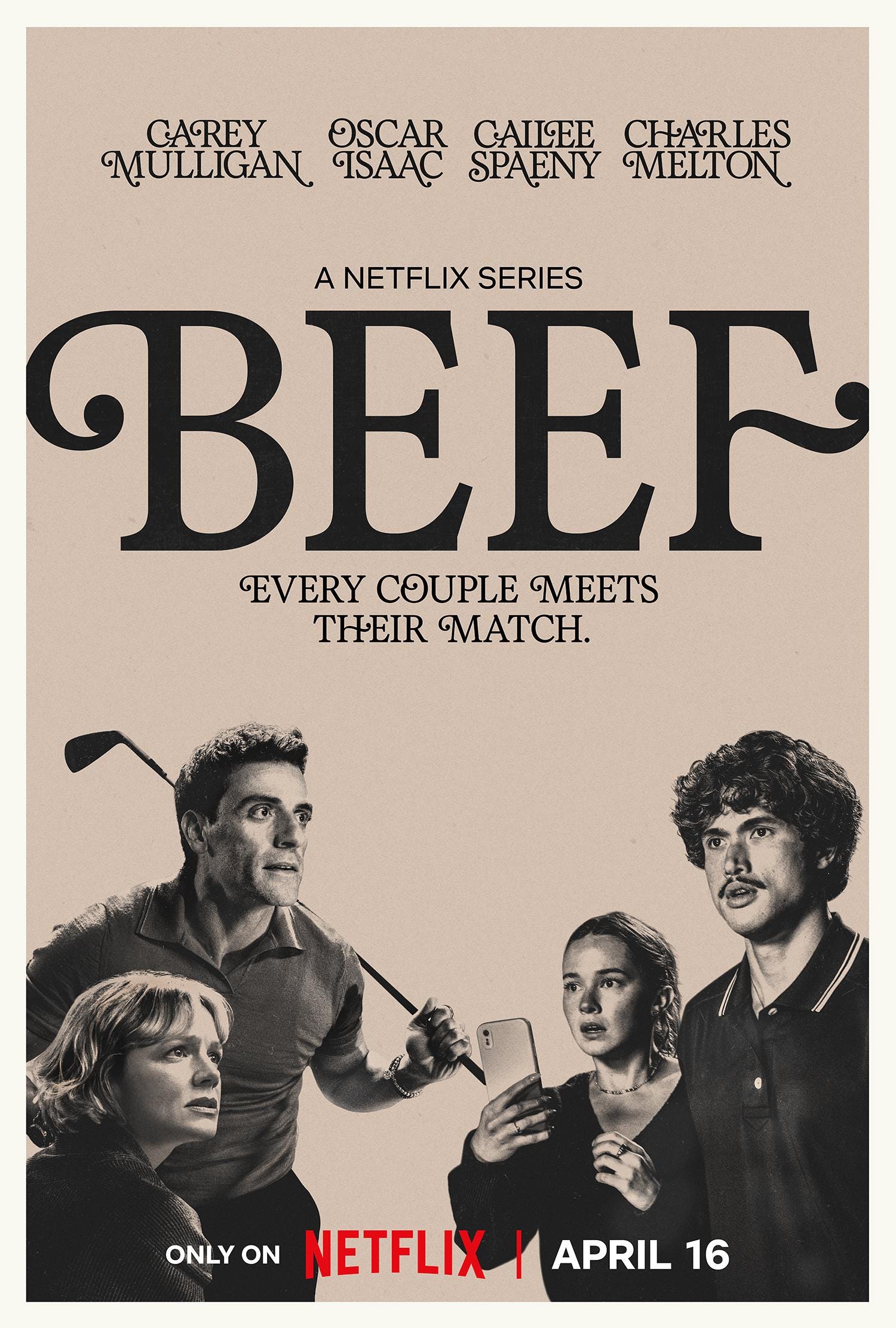
Josh and Lindsay cling to their youth. All the times they had and will never have again. Ashley and Austin feel the invincible allure of youth, naive in all the places J and L are jaded. Both couples shoulder the weight of the world and how to find a comfortable place within it. and all four’s dilemmas stem from the greed, self-interest and loneliness of capitalism.
There’s no doubt that a real love lies below the messy surface between both couples. And they’ve all given way to repression, shortsightedness and role-playing, rules that conceal the “dark side,” present curated personas to the world and seek immediate gratification, all things prone to upheaval. When you think about it, how could they not? Without genuine connection and emotional safety in their lives, they live in trepidation of the future. Although I didn’t mention them the 2 auxiliary couples, Ava and Troy, Chairwoman Park and Dr. Kim are powerful pillars to the same framework. This season was another hearty class commentary that illustrates with new clarity, the things that tear us apart are structural. They implant a loneliness as difficult to discern as it is corrosive to meaningful connection and economic security.