

Always Present, Never Known
Existential quandary’s of selfhood, writing intriguing characters, quasi-3D way to watch movies

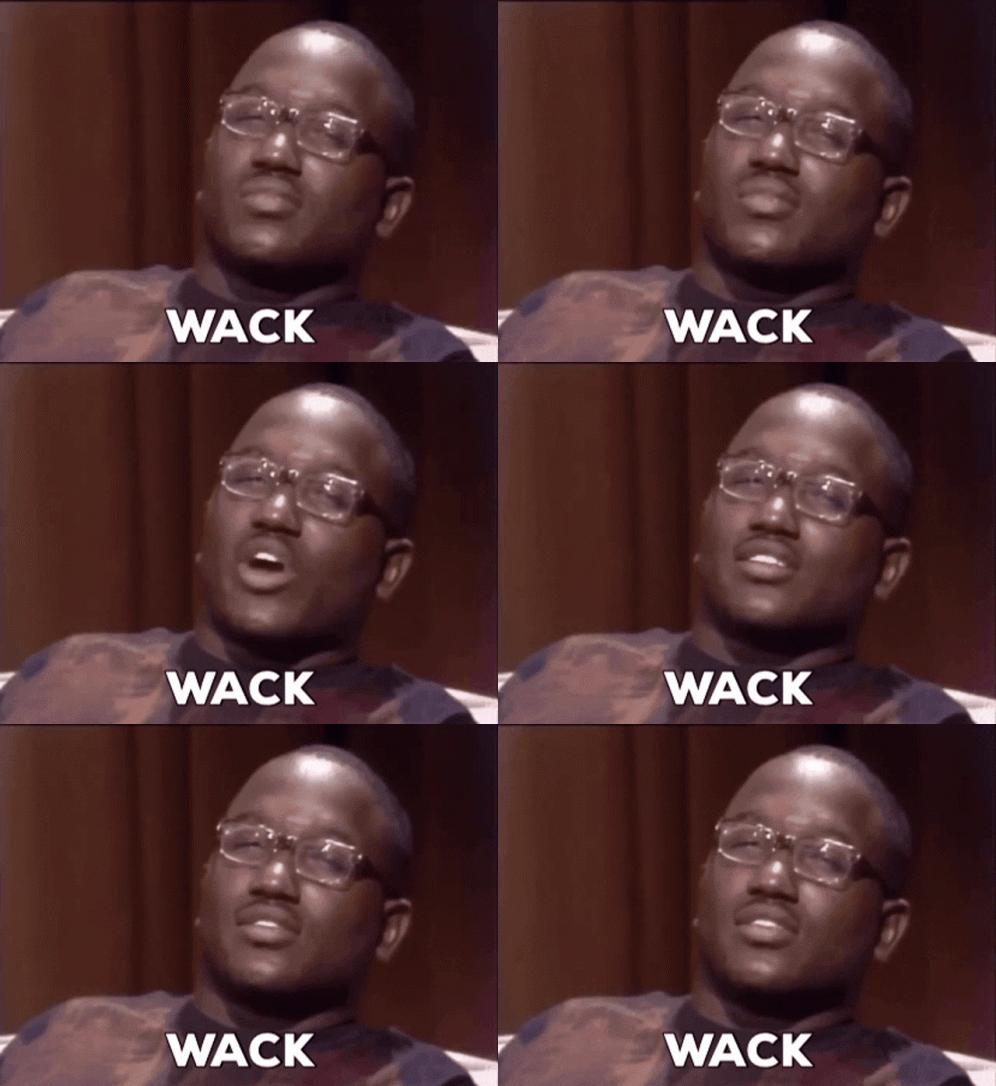
The air was dense and sweaty, like most clubs are. I stood alone at the bar, not a single drink in me. I spotted the friends I arrived with in a far corner, bouncing around to a botched remix of Ain’t Nobody by Chaka Khan. On the other side of the room, I spotted the remnants of a dance circle mourning the end of the last song. This was the route I chose. I hardly remember the moments between where I stood and where I ended up, the center of a dance circle, hell bent on reviving it. People began to accumulate around me and soon my friends’ faces appeared watching on with sizable grins, but none of that was motivation. I would’ve found myself in this position regardless of encouragement, although that part never hurts. These impulses, to make noise after extended silence, to burst into a comedic routine in inappropriate settings, and to animate whatever room I occupy feel almost involuntary. When the impulse leaves, I return to a state of calculated restraint.
My brain burrows into this dichotomy often, mostly because of a burning desire to remain authentic at all times, except the mere act of thinking about the measure of my authenticity eliminates that possibility altogether. For a long time, I questioned which behavioral coding was a truer reflection of me— the chaotically outgoing embracing all spontaneous bursts of energy or the stoically introspective speaking in measured, deliberate fragments. I thought maybe the me rested somewhere in between the outgoingly chaotic and stoically introspective. The balanced version that is the least encumbered by insecurities, obligations, pressures etc… but that’s a mythos, a transitory image. We will forever be affected by our influences and the varying degrees to which we are is not a gaping hole for falseness. Pursuits of the “truest” you are MOOT without the anchors of an ethical value system built on accountability, moral uprightness, awareness, and compassion. The rest tends to fall into the trappings of self-indulgence which is…
I see the self as always two degrees from the surface, above it or below, repressed or released, oscillating between becoming and being, never truly known but always present. Like Heisenberg’s uncertainty principle but for consciousness, kinda.

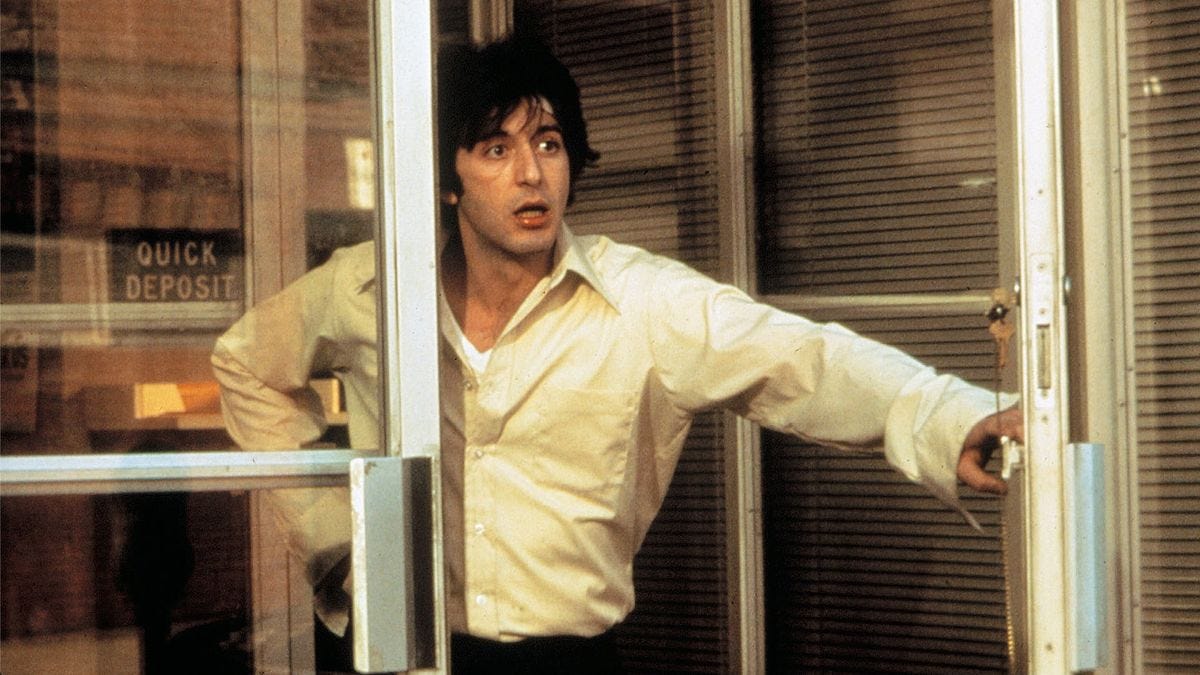
Turning the dial to the cinematic frequency, “swing” characters are some of the most exciting to write (and watch). Nuanced, psychological complexity is extremely difficult to crystalize on screen for a number of reasons, mostly because you can’t pin down their behavior. A recent favorite example is Sonny Wortzik in Sidney Lumet’s Dog Day Afternoon, introduced to us as a high-strung opportunist bank robber that slowly unravels into a man confronting the collapse of his masculine ideal and his fantasy of rescue as the consequences become out of his control. They don’t operate on sound logic and in a screenplay where actions are behavior, you can’t exactly follow a single motivational thread. And why would you want to? Single-minded characters fall flat, regardless of how intricate the worlds they reside in are. A character who comes from an environment where they had to fight to get their needs met doesn’t have to be passive. They could actually be aggressive. People are far more complex than the easiest conclusion. I’ve been making a more focused effort to map out the inner worlds of my characters and it brought me to a few focal points.
Avoid Over-Categorization:
Emphasize the why behind actions not the broad strokes of superficial labels in order to avoid surface-level stereotypes and instead delve into the underlying psychological mechanisms.
Understand Drive and Personality as two distinct things
Every character represents a strategy developed to meet psychological needs, often rooted in early experiences which shape personality and drive in conscious and unconscious ways
Focus on the core issues and motivations and let that trickle into outward behaviors.
Build from the inside out rather than from observable traits inward.
I re-watched Parasite this weekend alongside the storyboard book and it was absolutely invigorating.
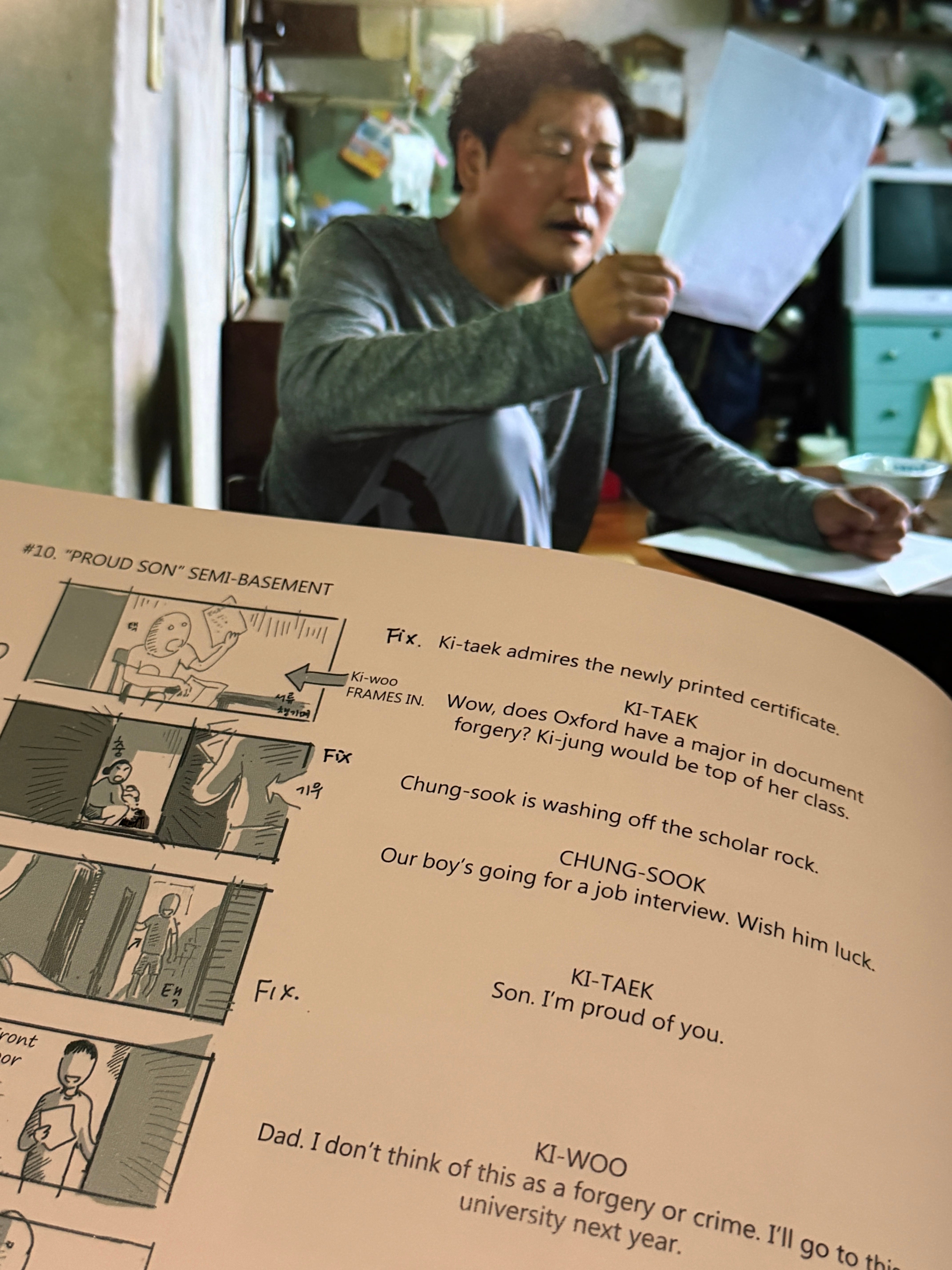
There’s something about tracing movements and compositions, shot for shot, that really unlocks the kind of conceptual momentum Bon Joon Ho was building off of. What makes it feel even more multi-dimensional is how even with the blueprint in front of you for every shot, the cuts still feel invisible and I found myself having to rewind several times to witness the translated glory.
I wish storyboards were as widely available as scripts because watching a movie with both on hand is an especially illuminating experience that I recommend to all, film junkie or not. But just don’t do it on the first watch!
Thanks for reading the newsletter! I beg you to subscribe in a super chill, champion of independent media kind of way :)